Welcome to the cultural heart of the
Merdeka 118 Precinct, where textile heritage
from the Malay World comes to life through
the Azah Aziz Collection.
in
days
in
days
The Merdeka Textile Museum
(MTM) is honoured to introduce
Preserving Heritage
and Inspiring
Artistry at MTM
Home to Puan Azah Aziz’s remarkable collection of textiles, costumes and jewelry, MTM celebrates the artistry and enduring cultural traditions of the Malay world.
In motifs, patterns, techniques and craftsmanship, a single length of fabric can paint a vivid picture of who we are; through what we wear, what we create, and what we celebrate.
Experience this living tradition at MTM where heritage is carefully curated and showcased to the world in engaging, innovative ways.
Welcome to the cultural heart
of the Merdeka 118 Precinct,
where textile heritage from
the Malay World comes to life
through the Azah Aziz Collection.
IN
days
days
The Merdeka Textile Museum
(MTM) is honoured to introduce
Preserving Heritage and
Inspiring Artistry at MTM
Home to Puan Azah Aziz’s remarkable collection of textiles, costumes and jewelry, MTM celebrates the artistry and enduring cultural traditions of the Malay world.
In motifs, patterns, techniques and craftsmanship, a single length of fabric can paint a vivid picture of who we are; through what we wear, what we create, and what we celebrate.
Experience this living tradition at MTM where heritage is carefully curated and showcased to the world in engaging, innovative ways.
The Merdeka Textile Museum
(MTM) is honoured to introduce
Preserving Heritage
and Inspiring
Artistry at MTM
Home to Puan Azah Aziz’s remarkable collection of textiles, costumes and jewelry, MTM celebrates the artistry and enduring cultural traditions of the Malay world.
In motifs, patterns, techniques and craftsmanship, a single length of fabric can paint a vivid picture of who we are ; through what we wear, what we create, and what we celebrate.
Experience this living tradition at MTM where heritage is carefully curated and showcased to the world in engaging, innovative ways.
How to Find Us
Merdeka Textile Museum (MTM) Merdeka 118 Precinct, 50118, Kuala Lumpur.
opening hours TUESDAY-SUNDAY (Museum closed on Mondays): 10:00 AM – 6:00 PM. (5.30 PM last entry)
Azah Aziz —
Quintessential Custodian
of Malay Culture
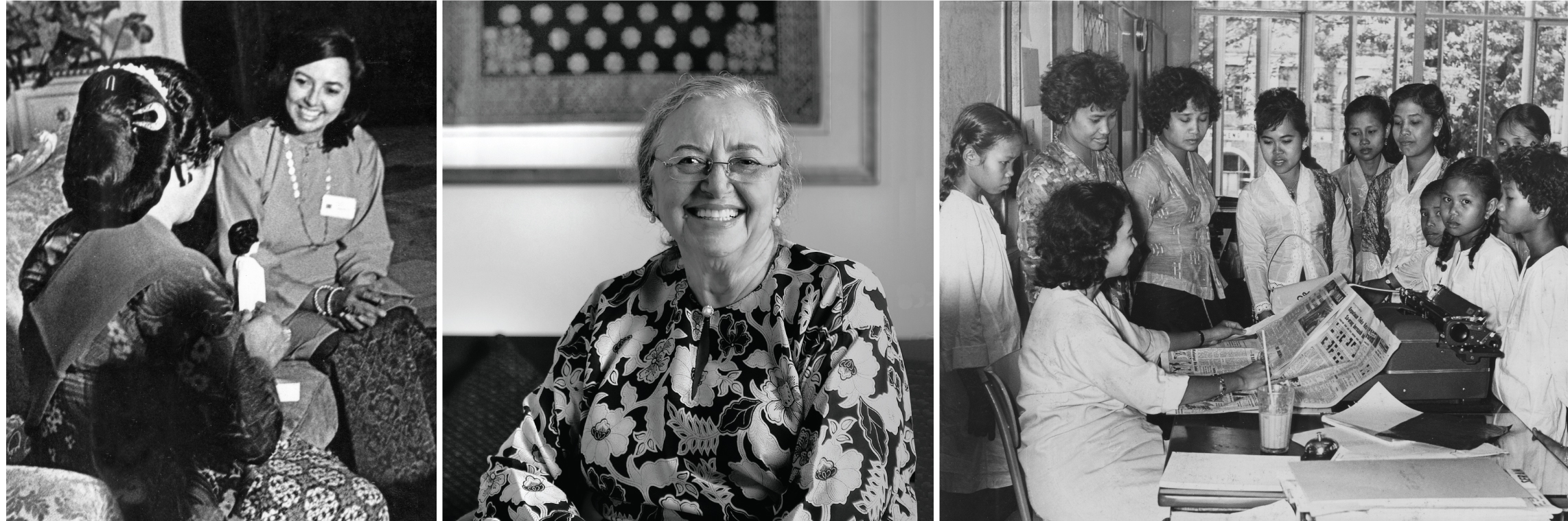
Azah Aziz (1928–2012), or “Tita” to her family, was a remarkable force. As a journalist, author, women’s rights advocate, and cultural custodian, her brilliance was influenced particularly by her mother, Azizah Jaafar, a pioneer in education. Born into a distinguished Johor family, her mother’s collection of rare Malay textiles ignited Azah’s lifelong passion for traditional attire.
Azah was dedicated to learning, advocacy, and cultural preservation.
When working for renown scholar Zainal Abidin Ahmad (Za’ba), Azah immersed herself in Malay literature, cultivating a profound appreciation for the Malay language. She became an acclaimed journalist, interviewing world figures including Indira Gandhi.
Her advocacy for wage equality, reforms in Muslim family law, and separate taxation for working wives transformed women’s lives. She co-founded Persatuan Tindakan Wanita Islam (PERTIWI) and other organisations empowering women.
Revered as a Malay Cultural Icon (Tokoh Budayawan Melayu), Azah’s cultural preservation work is her most profound legacy. Her meticulous research on Malay textiles and costumes understood through Malay classical literature is groundbreaking. Her seminal book Rupa & Gaya: Busana Melayu (2006) (Malay Textiles and Costumes: Form and Style) remains a vital reference for scholars of Malay heritage.
Azah’s collection of Malay textiles, costumes and traditional jewellery was gifted to the Merdeka Textile Museum by her daughter, Tan Sri Zeti Aziz.
Azah’s dedication to preserve Malaysia’s cultural identity continues to inspire future generations.
The Puan Azah Aziz collection consists of over 300 pieces of textiles and jewellery and is the museum’s core collection.
Azah Aziz —
Quintessential Custodian
of Malay Culture
The Puan Azah Aziz collection consists of over 300 pieces of textiles and jewellery and is the museum’s core collection.
Azah Aziz (1928–2012), or “Tita” to her family, was a remarkable force. As a journalist, author, women’s rights advocate, and cultural custodian, her brilliance was influenced particularly by her mother, Azizah Jaafar, a pioneer in education. Born into a distinguished Johor family, her mother’s collection of rare Malay textiles ignited Azah’s lifelong passion for traditional attire.
Azah was dedicated to learning, advocacy, and cultural preservation.
When working for renown scholar Zainal Abidin Ahmad (Za’ba), Azah immersed herself in Malay literature, cultivating a profound appreciation for the Malay language. She became an acclaimed journalist, interviewing world figures including Indira Gandhi.
Her advocacy for wage equality, reforms in Muslim family law, and separate taxation for working wives transformed women’s lives. She co-founded Persatuan Tindakan Wanita Islam (PERTIWI) and other organisations empowering women.
Revered as a Malay Cultural Icon (Tokoh Budayawan Melayu), Azah’s cultural preservation work is her most profound legacy. Her meticulous research on Malay textiles and costumes understood through Malay classical literature is groundbreaking. Her seminal book Rupa & Gaya: Busana Melayu (2006) (Malay Textiles and Costumes: Form and Style) remains a vital reference for scholars of Malay heritage.
Azah’s collection of Malay textiles, costumes and traditional jewellery was gifted to the Merdeka Textile Museum by her daughter, Tan Sri Zeti Aziz.
Azah’s dedication to preserve Malaysia’s cultural identity continues to inspire future generations.
Azah Aziz —
Quintessential Custodian
of Malay Culture
Azah Aziz (1928-2012), or “Tita” to her family, was a remarkable force; revered as a Malay Cultural Icon (Tokoh Budayawan Melayu), Azah’s dedication to cultural preservation work is one of her most profound legacy.
As a journalist, author, women’s rights advocate and cultural custodian, her brilliance was influenced particularly by her mother, Azizah Jaafar, a pioneer in education. Born into a distinguished Johor family, her mother’s collection of rare Malay textiles ignited Azah’s lifelong passion for traditional textiles and attire.
When working for renown scholar Zainal Abidin Ahmad (Za’ba), Azah immersed herself in Malay literature, cultivating a profound appreciation for the Malay language. She became an acclaimed journalist, interviewing world figures including Indira Gandhi.
Her advocacy for wage equality, reforms in Muslim family law, and separate taxation for working wives transformed women’s lives. She co-founded Persatuan Tindakan Wanita Islam (PERTIWI) and other organisations empowering women.
Her meticulous research on Malay textiles and costumes understood through Malay classical literature is groundbreaking. Her seminal book Rupa & Gaya: Busana Melayu (2006) (Malay Textiles and Costumes: Form and Style) remains a vital reference for scholars of Malay heritage.
The Puan Azah Aziz collection consists of over 300 pieces of textiles and jewellery and is the museum’s core collection.